When do my child’s teeth begin to come in?
While every child is different, your baby’s first teeth will usually start to come in between 6 months to 1 year of age. Girls will often get their teeth before boys. The first teeth to come in is usually one of the bottom, middle teeth called a central incisor. The next tooth to come in is usually the other bottom middle tooth. The upper two middle teeth are usually next (also called central incisors), followed by the teeth next to those on the top (known as lateral incisors). Your child’s molars, or teeth located in the back of the mouth that are usually more flat and wider, are the next teeth that will come in. They are followed by the bottom lateral incisors, then the pointed teeth (known as canine or cuspid teeth) and then the teeth in the very back of your child’s mouth (also known as second molars). These last teeth usually come in sometime between age 2 and 4 and you child will have all of their baby teeth by this time. The picture below is number and labeled to show the order that the teeth will appear.
Your child’s baby teeth will start to fall out around 6 years of age and permanent teeth will replace these. It will take until about age 12 for all of the baby teeth to fall out and be replaced by permanent teeth.

Why do I need to take care of my child’s baby teeth if they are just going to fall out and be replaced?
There are three reasons why it is important to take care of your child’s baby teeth, even though they are not the permanent teeth your child will have for life.
First, taking care of baby teeth prevents cavities and infection which are important to avoid so your child has a good quality of life without tooth and oral pain which can cause eating difficulties and distraction from learning, growing, and being a happy, healthy kid.
Second, it is important for your child to take good care of their baby teeth so they are learning healthy habits that they will continue with their permanent teeth and into adulthood. It is a lot easier for children to learn these habits earlier in life and to learn good habits, then to have to go back and break bad habits and retrain them to have good habits.
Lastly, the baby teeth are placeholders for the permanent teeth your child will get. By taking good care of your child’s baby teeth, you are keeping these teeth in place which will help provide adequate space and alignment for permanent teeth when they come in. In essence, these teeth are acting like natural braces. So, by caring for these baby teeth so they can stay healthy and in place until it is time to be replaced by permanent teeth, you will help ensure that your child’s permanent teeth have less issues that will need to be corrected by brace’s later in life.
How much toothpaste should I be using to brush my child’s teeth?
When your child first gets their first tooth, tooth brushing should begin. However, at this age, there is no need to use toothpaste. Use only a soft-bristled brush and water for your baby’s first tooth. Do not use fluoride toothpaste in children younger than 2 without talking to your doctor.

Starting at age 2, use a grain of rice sized amount of toothpaste with fluoride.
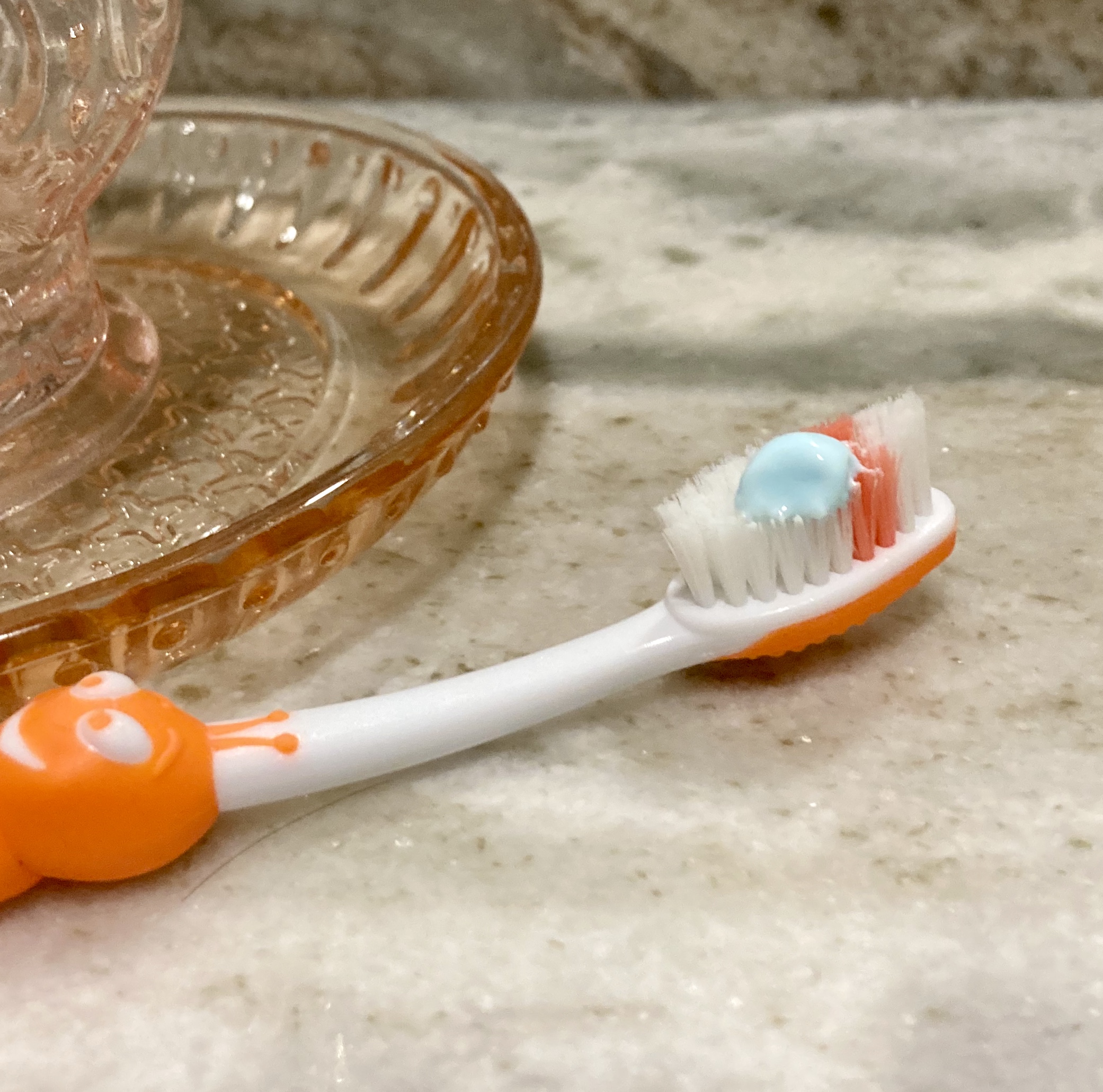 Once your child is 3 years old and able to spit out most of the toothpaste, you can begin to use a pea-sized amount of toothpaste. This amount is best to use in children ages 3 to 6.
What kind of toothpaste should I be using?
Use regular toothpaste with fluoride to brush your child’s teeth. The fluoride in the toothpaste helps to strengthen and protect your child’s teeth from cavities. If used in the appropriate amount, there is little risk for your child if they swallow the toothpaste.
If I’m using toothpaste that has fluoride in it, what if my child swallows it?
As long as you are using the correct amount of toothpaste, there is little harm in your child swallowing the toothpaste. That is why it is important not to use too much toothpaste, but only a rice sized or pea-sized (depending on your child’s age) amount. Encourage your child to spit out the toothpaste if they can and rinse their mouth, but don’t worry if a little toothpaste is swallowed. It won’t harm them.
Do I need to watch my child brush their teeth? If so, until what age?
Parents are always encouraged to be involved in their children’s oral health routine. This is a great time to bond and you’re making an impact in your child’s health by giving them good oral health habits for life and preventing cavities. As parents, you will have to do all or most of the brushing from the time your child’s first tooth appears until they are old enough and have the ability to brush their teeth well on their own. However, once children are able to hold and use the toothbrush on their own to brush their teeth, parents should still watch them brush their teeth to make sure they are cleaning their teeth well, getting all of the areas, and not using too much toothpaste.
What is fluoride varnish and should my child get it?
Flouride varnish is a clear polish that dentists and some healthcare providers can put on your child’s teeth to help protect them from getting cavities. The CDC notes that about 1 in 3 cavities can be prevented through the use of fluoride varnish.
When should my child first go to the dentist?
Your child should see a dentist by the time they are 1 year old. This will help them learn who the dentist is and what happens at the dentist which will help to decrease future anxiety when going to the dentist. This also allows the dentist to monitor for any early signs of tooth decay or oral health problems, so they can come up with a plan to help correct this and prevent further damage.
I have more questions related to oral health, what do I do?
Your child’s doctor and dentist are always happy to answer any questions you may have about oral health, but the Center’s for Disease Control (CDC) is also a great resource for tons of information about oral health and things you can do to help improve your child’s oral health. Click here to learn more.
